
The company, backed by China's Ant Group, is planning to issue fresh shares worth Rs 7,500 crore in the IPO. This will make this India's third-largest offering after Reliance Power and DLF.

Since home-delivered meals from five-stars are cheaper by 15 to 20 per cent as compared to eating at the destination outside, food delivery has emerged as an important part of every restaurant's service portfolio.

Brokerages are expanding the universe of stocks they cover amid a boom in the market. Several stocks in the mid-cap universe are now tracked by more analysts than they were a year ago. For instance, SBI Cards and Payment Services is now tracked by 17 brokerages, compared to just four a year ago.

Since its launch in April, helpline 155260 has been able to prevent more than Rs 18.5 million of defrauded money from reaching the hands of fraudsters.

The clarification by the National Securities Depository (NSDL) - which is tasked with monitoring foreign portfolio investor (FPI) investment in domestic stocks - that the accounts of top investors in Adani group stocks remain 'active' has helped prevent a $500-million selloff of shares. Analysts said a freeze of the FPI accounts, as reported by some media outlets, could have prompted global index providers to cut weighting of four Adani group companies from their global indices. Brian Freitas, an analyst at independent research provider Smartkarma, said if the FPI accounts were indeed frozen, FTSE and MSCI would have reduced weighting of Adani group companies at the next rebalance, since it would have meant that the large part of the free float was not tradeable.

Bug bounty hunters or independent ethical hackers are certified cybersecurity professionals or security researchers who crawl the web, scanning the systems for gaps through which hackers can sneak in and alert the companies, says Shivani Shinde.

Easier dilution norms for mega initial public offerings (IPOs) have come into effect. Companies with post-listing market capitalisation (m-cap) of more than Rs 1 trillion will not be required to dilute a minimum of 10 per cent. The move to relax dilution norms is seen as a precursor to Life Insurance Corporation's IPO. The central government has said companies with an m-cap exceeding Rs 1 trillion will have to dilute Rs 5,000 crore and at least 5 per cent of their m-cap. Experts said the earlier framework discouraged large companies from listing since they were forced to offload a large volume of shares during the time of their IPO.

The Securities and Exchange Board of India (Sebi) has directed Franklin Templeton MF to pay Rs 5 crore as penalty, return over Rs 450 crore collected as 22-month investment management and advisory fees, and imposed a two-year ban on launching new debt schemes for alleged irregularities in running six of its debt schemes that were shuttered last year.
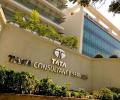
Tata Consultancy Services (TCS) has weathered the pandemic very well, and has earned tremendous goodwill from customers, which enhanced the firm's standing in the market, N Chandrasekaran, chairman, said in his virtual address of the 26th Annual General Meeting on Thursday. He said TCS shareholders received over 3,000 per cent return on their investments since the company was listed in 2004.

One of the biggest lessons for cities fighting the Covid-19 pandemic has been the criticality of access to data. Mumbai, which has shown significant success in managing the second wave of the pandemic, is a case in point, reports Shivani Shinde.

Domestic equity markets are in elite company. In May, Indian markets joined select developed markets (DMs) such as the US, UK and Germany to record new all-time highs. Among emerging markets (EMs), Brazil is the other market to have logged new highs this month. Asian peers such as South Korea, Taiwan and New Zealand are currently between 2 per cent and 10 per cent below their previous highs made earlier this year. The domestic markets were among the worst-performing major global markets in April amid a lethal second-wave of covid-19 infections.

With India's market capitalisation surpassing the $3-trillion mark, stocks across the board are adding heft. The upper limit for qualifying as a mid-cap stock -under the Securities and Exchange Board of India's (Sebi's) definition for mutual fund reclassification - has hit an all-time high of $5.4 billion. In 2013, amid the taper tantrum sell-off, it had dropped to just $1 billion, shows an analysis done by ICICI Securities.

The total value of India's top 100 brands has increased by 2 per cent, from $162.1 billion in 2020 to $164.9 billion in 2021, according to the latest Brand Finance India 100 2021 report. This uplift in brand value over the course of the first year of the pandemic is an impressive feat given the global economic crisis following the implementation of national lockdowns in March 2020, when business activity was brought to a halt, affecting both production and consumption. Among the brands that came on the top of the list include Tata Group, Reliance Industries, and Mahindra Group.

'Personally, I have reached that stage where I think material things can't give you any satisfaction.'

Digital payments provider Paytm is all set to make its market debut as early as this year, with an aim to raise $3 billion (around Rs 22,000 crore). If successful, this could be the biggest initial public offering (IPO) by an Indian company, breaking Coal India's 2010 record of Rs 15,475 crore. According to media reports, the board of One97, parent company of Paytm, is all set to meet this Friday to formally approve the IPO plan.

Banking technology start-up Zeta is the latest entrant to the unicorn club after raising $250 million in its Series C round from SoftBank Vision Fund 2. Sodexo participated as an additional minority investor in the round. Founded by serial entrepreneur and billionaire Bhavin Thurakia, the startup is now valued at $1.4 billion. It is the 14th company this year to cross the $1 billion valuation mark after Meesho, Cred, Pharmeasy, ShareChat, Moglix and others.

The country's dash to a $3-trillion market cap is more a case of teamwork, than a few members doing most of the heavy lifting. Sample this: The share of top 100 companies to India's total market cap (BSE-listed companies' m-cap) is 67.3 per cent currently, less than what it has been when the nation hit previous milestones, such as $1 trillion, $1.5 trillion in 2007 or $2.5 trillion more recently in December 2020. In 2007, when India's m-cap topped the $1-trillion mark for the first time, the top 100 companies accounted for three-fourths of the total m-cap; at $1.5 trillion, the share was almost 80 per cent.

Shortages of chips will impact the car market

From helping their employees infected with the Covid-19 virus to vaccinating them or supporting the families of those who might have succumbed to the infection, several companies in India are trying to do their bit in this difficult time. Some have even widened their support net to include all stakeholders as well as an extended community. To the families of the employees it lost to Covid-19, Noida-headquartered IT services and consulting company HCL Technologies is, for instance, paying salary for a year, medical insurance for three years and extending support for their children's education for five years.

Thirteen companies have joined the Rs 1-trillion-plus market capitalisation club this year, so far. This even as the benchmark Sensex has gained less than 3 per cent on a year-to-date basis, underscoring the bullish undercurrent in the broader market. The trend shows a harsh second wave of Covid-19, subsequent lockdowns, and hit to the economic activity has made little dent into India Inc or shareholders' wealth. At the start of the year, there were 29 companies with a market value of more than Rs 1 trillion.
 © 2026 Rediff.com - Advertise with us - Disclaimer - Privacy Policy - Sitemap - Feedback - About us - Terms of use - Grievances